I opened the envelope with such clumsy hands that Janotti had to pull up a chair for me before my knees decided to buckle on their own.
Inside there was no long letter, no sentence, no explanation that could reassure a man like me.
There was a small photograph, folded in half, and a piece of graph paper torn from a school notebook.
The photograph showed the side entrance to the old cemetery, the same iron archway through which my father had first taken me when I was nine years old.

In the picture was a boy with his back to the camera, holding a shovel too big for his arms, staring at an open grave under a white sky.
There was no need to see his face to recognize him.
It was me.
The graph paper had only six lines, written in that cramped, rapid handwriting that boys have when they believe the world can still be put right.
It read: “Donato Cavalli shouldn’t be afraid when he finds this, because he alone keeps what others need to find later.”
I read the sentence three times, hoping it would change, hoping I’d confused my last name, hoping the ink would become a meaningless smudge.
But there it was, my full name, written by a boy who, according to all the records, had never seen me.
Janotti said nothing at first.
He just folded his hands inside the sleeves of his habit and let the silence do its work.
“Where did this come from?” I finally asked, though my voice sounded like it belonged to someone else.
The friar looked at the open box, not at me.
“Carlo left several envelopes before he became seriously ill.”
I felt something cold creep up my spine, colder than the basilica’s stone at dawn.
“Several?”
Janotti nodded slowly.
“Some had names the family knew, others didn’t.”
I jumped up, because I needed to move, I needed to hear the weight of my boots on the floor to remind myself that I was still in the world.
“This is impossible.”
The friar didn’t argue.
Men of faith, once they’ve seen something, don’t waste their energy fighting against the denials of others.
“Carlo’s mother asked that no one open those envelopes until the designated person arrived.”
I turned to him.
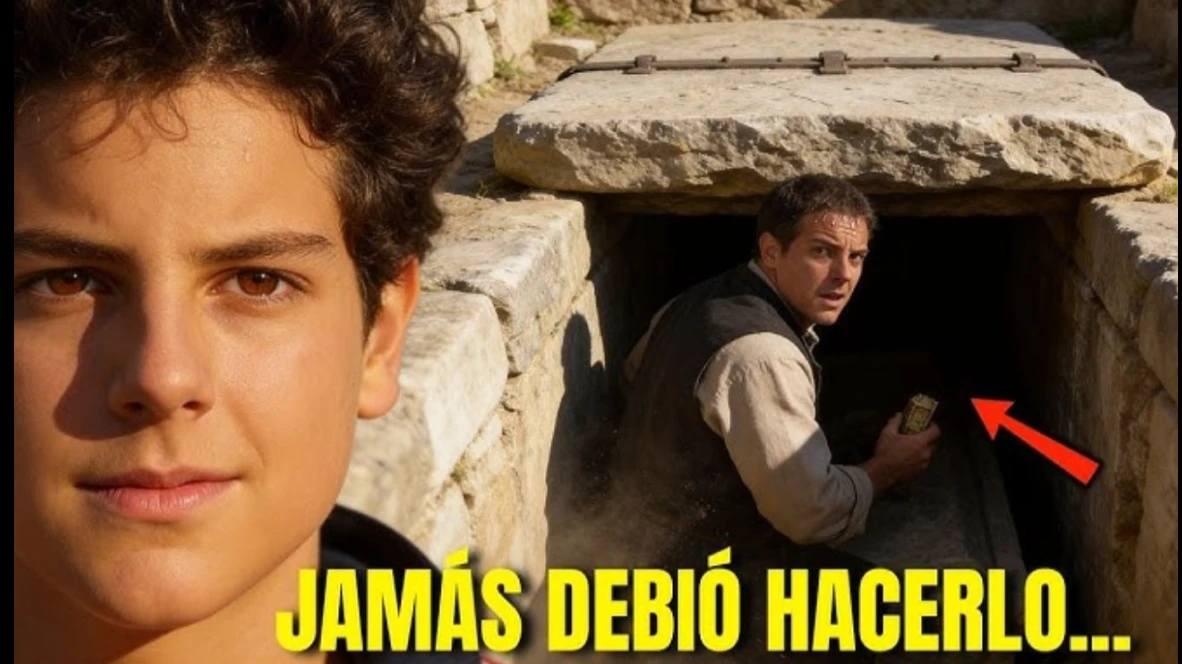
“And she decided I was the designated person because I placed a note on a grave?”
Janotti lowered his gaze.
That was worse than any answer.
“How do you know?” I asked.
The friar carefully closed the box, as if it contained something that breathed.
“Because the envelope said you would.”
I don’t remember leaving the sacristy.
I remember the square outside, the light falling on Assisi, the distant voices of the pilgrims, and my hand squeezing the photograph until a corner was wrinkled.
Sandro was waiting for me by the van, smoking without lighting his cigarette.
When he saw my face, he threw the cigarette to the ground.
“What happened?”
I showed him the photo.
He didn’t touch it.
He just leaned over, looked for a second, and stepped back as if the paper were burning him.
“That’s you.”
“It was me.”
“Who took it?”
That was the question.
My father had died in 1991, my mother had never used a camera, and that day in the cemetery there was no one else, except an old man buried without flowers.
I put the photo in the inside pocket of my jacket.
“Let’s go find the notebook.”
Sandro understood immediately.
He didn’t ask which one.
We returned to my house after dark, and Gracia was in the kitchen, slicing bread with an uncharacteristic slowness.
She always knew when I was carrying something, even if she couldn’t see my hands.
“Father Janotti called you,” she said without looking up.
“I saw him.”
The knife stopped.
“So you know.”
There aren’t many phrases capable of splitting a life in two.
That was one of them.
I looked at her the way you look at a wall that suddenly reveals a door.
“What do you know?”
Gracia put down the bread, wiped her fingers on her apron, and walked to the drawer where we kept receipts, candles, and expired medicine.
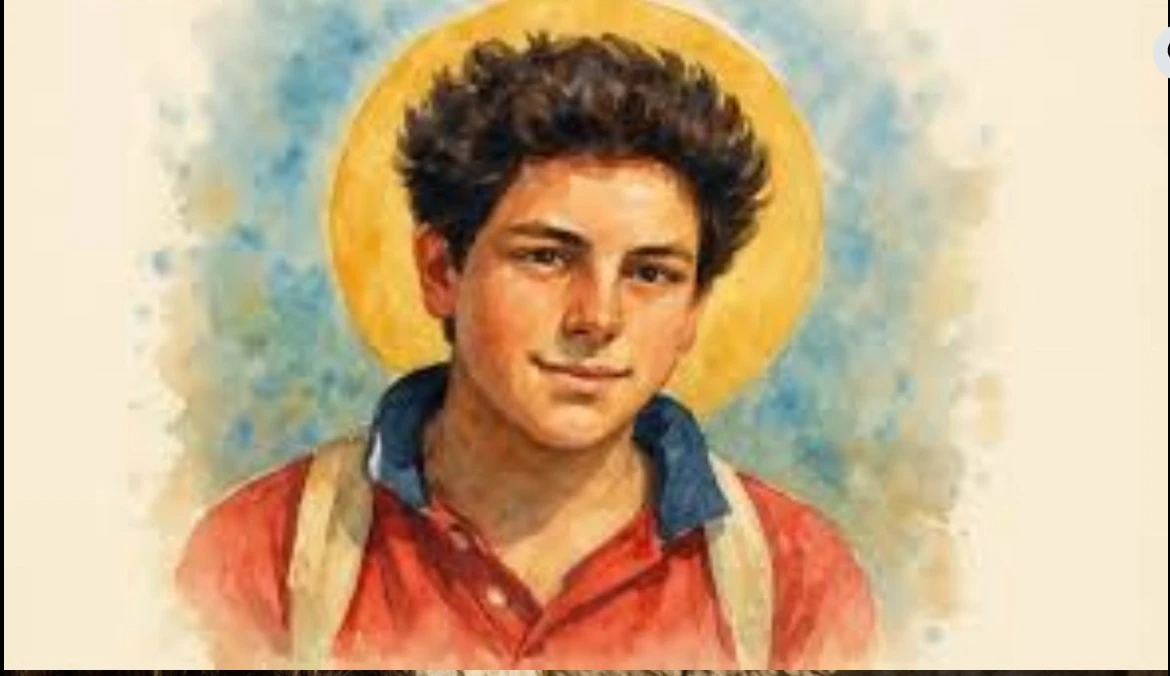
She took out a picture of Carlo, one of those small images that people tuck between the pages of books.
On the back was a date written by her: October 3, 2006.
Ten days before the burial.
“I went to see him at the hospital,” she whispered.
I didn’t feel anger at first.
I felt emptiness.
Like someone had pulled a floorboard out from under me.
“Why didn’t you tell me?”
Gracia pressed the sticker to her chest.
“Because he asked me not to until you found the paper.”
My mouth went dry.
“What paper?”
She looked toward the window, where night had already pressed its face against the glass.
“The one you hid.”
No one in that house knew about my note.
Not Gracia, not Sandro, not even my father, who had been six feet under for fifteen years.
I sat down because I could no longer stand with any dignity.
Gracia knelt before me and took my hands, but I barely felt her fingers.
“Carlo told me that a man would leave a truth where no one would look for it.”
“And you believed that?”
She didn’t answer immediately.
When she did, her eyes were
filled with an ancient fear.
“Not at first.”
He told me he had gone to the hospital to deliver a blanket woven by the women of the parish.
Carlo was weak, but awake, with the lively gaze of someone who sees beyond the walls.
He didn’t speak of pain.
He didn’t speak of fear.
He asked for my name.
Gracia thought he meant another Donato, until Carlo said my full last name and described my work boots with the torn soles.
Then he asked her not to try to stop anything.
She was only to remind me of a phrase when the time came.
“What phrase?” I asked.
Gracia lowered her voice.
“Not everything that is sealed stays sealed.”
That night I didn’t sleep.
I left the photograph on the table and stared at it until the lamp began to buzz.
At 2:13 a.m., the house phone rang once.
Gracia woke with a start.
I was already up.
I glanced at the black device in the hallway, waiting for the second ring, but the house fell silent again.
As I approached, I saw something I hadn’t noticed before.
The small screen displayed an impossible number: 000-000-1506.
I didn’t answer.
An undertaker learns that not every call should be answered.
The next morning, I went to the basilica alone.
I didn’t tell Sandro or Janotti.
I took the service key, the thermometer, a flashlight, and the notebook where I had copied every reading since that first day.
The tomb was closed, quiet, clean, surrounded by the silence of things that wait.
I placed my palm on the stone.
19.6 °C.
The air inside read 15.2.
The difference wasn’t just still there.
It had increased.
I opened the notebook angrily, as if the numbers were guilty of making sense.
Then I saw that on the last page there was a line I hadn’t written.
The ink was blue.
The handwriting was the same as on the envelope.
“Look under the silent piece.”
I stood motionless.
The basilica creaked with a minimal noise, perhaps old wood, perhaps stone settling, perhaps something I preferred not to name.
I knelt beside the side of the tomb and gently tapped each block with my knuckles.
One sounded solid.
Another gave a brief echo.
The third, near the support where I had hidden my paper, produced a dry, hollow sound.
I felt my heart pound in my throat.
I shouldn’t open anything.
I wasn’t allowed.
I had no right.
But I hadn’t had the right to hide my testimony either, and yet I had done it.
I took out the fine tool we used for cleaning stone joints and began scraping away the fresh sealant.
The dust fell in white streaks onto my trousers.
Each stroke felt too forceful, even though I was barely breathing.
It took me twenty-seven minutes to loosen the piece.
When I removed it, the dark gap where I had slipped my note appeared.
My paper was still there.
But it wasn’t alone.
Beside it was a small object wrapped in white cloth, tied with blue thread.
I hadn’t put it there.
I swear on my father’s hands, on my mother’s grave, and on all the names I’ve buried in the earth.
I picked up my note first.
It was still folded four times.
I unfolded it.
My measurements were there, but underneath was another sentence, added in blue ink.
“Thank you for leaving human evidence where others will look only for a sign.”
The wrapped object weighed very little.
I opened it slowly.
Inside was an old gray plastic digital watch, its strap broken and its screen off.
It was a cheap model, the kind kids used before they wanted better phones.
On the back, someone had scratched three letters with a metal point.
AD.
For a moment, I thought they were my initials again.
Then I remembered they could also be for something else.
Anno Domini (AD).
Donato Cavalli.
Two readings for the same brand.
The watch had no visible battery, or so I thought until the screen flickered.
A line of numbers appeared silently.
11:07.
The same time as Carlo’s death.
I dropped the watch and backed up so far that I hit my back against a column.
The device fell onto the stone, but it didn’t break.
The screen went black again.
Then I heard footsteps.
They weren’t coming from the main entrance.
They were coming from the sacristy.
I instinctively put my watch back in my pocket, slipped my note back into the slot, and placed the piece back in without sealing it completely.
Janotti appeared with a small lamp in his hand.
He didn’t seem surprised.
That infuriated me more than if he had yelled at me.
“You knew I was coming.”
“No.”
“You’re a terrible liar for a friar.”
Janotti approached the tomb and looked at the open joint.
“I knew someone would come before the week was out.”
I took my watch out of my pocket and held it up to him.
For the first time, I saw fear on his face.
Not theatrical fear.
Real fear, the fear of a man who had just confirmed a suspicion that had been weighing on him for some time.
“Where was that?” he asked.
“Where it shouldn’t have been.”
Janotti made the sign of the cross, but his hand trembled.
“Carlo wore that watch during his last days.”
“Then someone put it in the tomb.”
ba.
The friar closed his eyes.
“It wasn’t in the coffin.”
“How do you know?”
“Because I checked every authorized item.”
The word “authorized” hit me hard.
I, too, had put something unauthorized in there.
The difference was that my paper explained an anomaly.
The clock multiplied it.
Janotti led me back to the small room.
He took a second envelope from the box.
It had no name on it.
Only a phrase written in the same blue ink: “For when they find time stopped.”
Inside was a folded sheet of paper.
Janotti placed it on the table, but didn’t open it.
“Read it.”
I didn’t want to.
I wanted to go back home, burn the notebook, tell Gracia we should move far away from Assisi and take simple jobs in simple cemeteries.
But the clock was between us, turned off, as if waiting for my decision.
I opened the sheet of paper.
Carlo’s handwriting read: “Time doesn’t stop for me, but for those who need to remember that nothing is lost when it is given.”
I kept reading, and each line seemed written not for the Church, nor for the devout, nor for the merely curious.
It seemed written for weary men like me.
“Donato will think he desecrated a tomb because he hid a piece of paper, but that paper will be necessary when they doubt what their hands saw.”
I covered my mouth.
Janotti didn’t move.
“He measures because he doesn’t know how to pray without numbers, and God doesn’t despise men who can only approach Him with a thermometer.”
I felt such profound shame that I had to look away.
I had spent half my life silently mocking those who kissed marble, those who left flowers, those who spoke with names written in stone.
And now a dead boy was explaining to me that my clumsy way of looking had also been looked at.
The last line read: “Do not let the watch be venerated; let it be remembered as a question.”
Janotti folded the sheet with an almost painful delicacy.
“What does it mean?”
I shook my head.
“I don’t know.”
But I did know something.
I knew the watch shouldn’t stay with me.
I knew it shouldn’t disappear either.
And I knew that my note, my petty sin of a curious gravedigger, was no longer just mine.
For three weeks we kept silent.
Janotti resealed the piece with my own hands, but first he allowed me to leave the watch next to the note, wrapped once more in white cloth.
There was no ceremony.
There were no witnesses.
Only a friar, a gravedigger, and an absent boy who seemed to be ordering our lives from a place without walls.
The readings continued to slowly decrease until they matched the ambient temperature on the twenty-seventh.
When that happened, Sandro smiled for the first time since the burial.
“It’s over.”
I didn’t answer him.
Because I knew it wasn’t.
Phenomena end.
Questions don’t.
Years later, when everyone started talking about Carlo, when his name stopped belonging only to his family and began to travel across screens, prints, and unfamiliar lips, they came looking for me again.
A journalist found me in the cemetery, cleaning moss from a forgotten gravestone.
He asked me if it was true that I had worked on that grave.
I said yes.
He asked me if I had seen anything extraordinary.
I said the wood was well-crafted.
The man left disappointed.
I did that many times.
I denied it without completely lying.
Because I learned that some truths shatter when revealed too soon.
But tonight I write because my hands are no longer steady, because Sandro died two winters ago, and because Janotti sent me a letter before losing his voice.
That letter contained only one instruction.
“When you hear the phone ring even once more, count what you sealed.”
Yesterday, at 2:13 a.m., my house phone rang.
Once.
Gracia is no longer here to hold my hand.
The house was dark, and the same impossible number appeared on the screen.
000-000-1506.
I didn’t answer.
I went to my desk, took out my black notebook, and opened to the last page.
The blue phrase was still there.
“Look under the room that doesn’t ring.”
But now there was another line underneath.
New.
Fresh.
Impossible.
“It’s time, Donato.”
That’s why I’m telling you what I hid.
It wasn’t just a note.
It was proof that my hands had touched something that shouldn’t retain heat, and yet it did.
It was a clock stopped at 11:07, hidden where no honest man would have put anything.
And it was a letter from a fifteen-year-old boy who knew my name before I knelt by his grave.
I’m not asking you to believe me.
Gravediggers don’t live off the faith of others.
We live by filling holes, leveling the earth, and leaving the world a little more orderly after the mourning.
But from that day on, I understood that some graves aren’t sealed to lock away the dead.
They’re sealed so that the living learn to wait.
And I waited twenty years.
Now I leave this story as I left that note: folded four times, hidden where someone, someday, will have to find it.